Literature for the Soul
English 102
with Professor Jennifer Mignano-Brady
with Professor Jennifer Mignano-Brady
Class Motto: “ Nothing great was ever achieved without enthusiasm” -Ralph Waldo Emerson Essayist & poet (1803 - 1882)
Amazing Lessons on Topics such as:
- Greek Plays
- "Antigone" by Sophocles
- Tragic Hero, Anti-Tragic Hero
- "Street Car Named Desire"
- By Williams
- Symbols and Motifs
- Short Stories
- "The Storm" by Kate Chopin
- "The Story of an Hour" by Kate Chopin
- "The Yellow Wallpaer" by Charlotte Perkins
- "White Women of Color" by Julia Alvarez
- Oppression
- "Children of the Sea" by Danticat
- "Hills like White Elephants" by Ernest Hemingway
- “Interpreter of Maladies" by Jhumpa Lahiri
- Poetry Unit
_________________________________________________________________________________
Healthy Mind, Healthy Life
A group of individuals who practice and study mindfulness to live a happier and loving life. They're dedicated people who came from different backgrounds, who have the same mission: to explore mindfulness to enjoy a better life, to develop a caring relationship and a compassionate society.
How mindfulness works to break bad habits.

Click On The Link Below to learn more:
https://www.mindful.org/mindfulness-meditation-guided-practices/?gclid=Cj0KCQjw5qrXBRC3ARIsAJq3bwqcZhgvArBFDirWdK_kpTcsdOVRuRLBuTRb0yiRAbLpS_SQImXmBuAaAoH5EALw_wcB

_________________________________________________________________________________
Hamartia
Sophocles said, “The greatest griefs are those we cause ourselves.” Acts of grief are those only ourselves can take blame for, therefore, the hurt from blaming ourselves can be the most difficult thing to endure because it was brought about of our own choices. For example, in the play “Antigone” written by Sophocles, Creon making an unwritten law brought upon great grief onto himself, which lead to his downfall. Aristotle suggest, “a hero of a tragedy must evoke in the audience a sense of pity or fear.” It becomes important that the character is neither better or worse morally than a normal person. Heroes are never perfect, they posses a fatal flaw that can be their undoing. A tragic anti-hero, like Creon, must have traits such as noble, imperfect, flawed, greedy, prideful, and altruistic.
An anti-hero has become increasingly popular in today’s fiction, film and television because they resemble real people more than any other fictional character. The anti-hero may seem charming, obnoxious, and humane at first, however, the actions and decisions they later take domiciliate the opposite traits of a hero. They are always failed heroes and deeply flawed, but the reader ends up rooting for the character despite his flaws and bad deeds.
In “Antigone,” Creon made choices that caused grief among the city of Thebes and many other characters throughout the Greek play. However, through his choices he become known as a classical Greek anti-tragic hero. Creon is a selfish man and who is motivated by self-interest and self-preservation. When the two brothers caused a civil war in the city of Thebes, Creon had no other choice to make decision that will stop the chaos in the city and the only way he knew how was to provoke fear in the people. For example, when Creon asked Antigone, “You are alone among the people of Thebes to see things in that way.” Antigone goes, “No, these do, too, but keep their mouths shut for the fear of you.” (Sophocles, 555) He was an extraordinary man, who overcame difficult obstacles to prevent the city from destruction. He displayed courage when facing the story’s problems and sacrificing himself and his family by sentencing his niece to death. He held moral and exemplary traits, such as prideful and altruistic, when he refused to listen to anyone else’s advice, and is afraid to admit when he is wrong. For example, Creon not taking any counsel but his own; he says, “My mind is bewildered. To yield is terrible, but by opposition to destroy my very being with a self-destructive curse must also be reckoned in what is terrible.” (Sophocles, 1158) Which lead to his downfall as a king, father and husband. Also, Creon comes aware of his actions and knows he is “no more a live man than one dead.” (Creon, 1386) This allows for the reader to feel petty and sympathy for Creon.
The concept of a tragic hero ties the characters Creon in the play, “Antigone” by Sophocles and Stella in the play, “A Streetcar named Desire” by Tennessee Williams. Both of these character made choices due to the actions they committed that lead to their portrayal as an anti-hero. Creon and Stanley have similarities such as, hard-working, family man and prideful, however they are also controlling, selfish, and arrogant. One significant similarity is they both enjoy having everything going the way they want. They both demonstrate their need and control for power as a strong male figure challenging the main character. Characterizing both Creon and Stanley as anti-heroes because they commit acts in way contrary to society standards. As they play continues, the character’s show through their brutal nature when they are confronted with decisions.
Similar to many Greek plays, Williams tends to write his story’s on his own life experiences. Writers during this period challenged social norms and opposed the lack of conformity. He created a character that help to represent real life people and ideas in the play “A Streetcar named Desire.” When Blanche DuBois enters Stanley Kowalski fantasy life with Stella, his animalistic and brutish qualities are revealed through his intense hatred for Blanche. He evokes fear and pity to the people around him in order to get what he wants. He makes it clear to both Blanche and Stella that he is the “king” around here, by ferly throwing everything off the kitchen table, “Now that’s how I am going to clear the table. Don’t ever talk that way to me.” (Williams, Scene 4) Also, he shows his superiority by screaming, “Every man is a king! And I am the king around here, so don’t you forget it!” (Williams, Scene 8) However, Stanley’s love for Stella makes him do a 360 because he was able to win over Stella. Stanley’s admiration and fear of losing Stella makes him imperfect, noble, faithful, and determined. He resorts to beating his wife, and raping his sister-in-law which is why we will never see him the true hero. He shows goes to great lengths and commits terrible acts to keep Stella in his life. However, no matter how aggressive he might be toward her, he shows great compassion and love for her. “Stella! MY baby doll’s left me! Breaks into sobs.” (Williams, Scene 3) Even though he is seen as a villain, he has potential to be lovable.
Creon’s downfall can be compared to tragic hero, Walter White, from a modern day television show. Walter is a middle aged chemistry teacher who is diagnosed with lung cancer and struggling to find ends meet for his family. He decides to start mass-producing meth to secure his financial future. The television show demonstrates how dangerous and life threatening the drug trade truly is and ultimately ending the show with Walter White’s final goodbyes. The audience of the television show feels pity for Walter because of his difficult life dealing with his cancer, his son’s cerebral palsy, and his wife pregnant with his second child. As well as, fear because throughout the whole show you root for him not to ever die. He gains a great amount of power that goes straight to his head and stops at nothing to get what he wants. There were plenty of times in the show when Walter had plenty of money to give up this trade and lifestyle up, but refused. One example showing Walter being greedy, is when he loses hundreds of millions of dollars, in his $2 billion company, by selling his shares in his company to early. Moreover, Walter can be related to Creon when he gains control of Thebes when his two nephews pass; showing how both characters are filled with greed.
One thing all three of these character have in common is they all hold great status and hamartia. Therefore, labeling Creon, Stanley, and Walter all tragic anti-heroes in the eyes of the reader. Every action and choice the characters made was based on their own free will and caused grief because they created it themselves. People in society suffer from all forms of troubles and difficulties. Being an anti-hero means they only care for themselves and their family and friends surrounding them. Which is why an ordinary realistic person who is reading about these extraordinary plays and watching these modern day films can relate to these anti-heroes.

Works Citied
Sophocles . Antigone. 442BC.
Williams, Tennessee . A Streetcar named Desire. 3 Dec. 1947.

_________________________________________________________________________________
February 6th, 2018 - Favorite Lecture #3
Antigone by Sophocles
Honoring a life and treating the body with Dignity.
On class Tuesday February 6th, 2018 we discussed the introduction of the Greek play Antigone written by Sophocles. I disliked reading about Greek plays in high school such as Julius Caesar. However, Professor Brady did a great job introducing the play by drawing me in with the background of the play and how it relates and has affected the writing and reading of literature today.
We got into he discussion of burial rites and the sages of honoring a body in the Greek religion. When a human being dies, the spirit leaves the body and then is played in heaven to continue on with inner peace. However, if a body is NOT properly buried he Greeks believe he body is stuck in suffering between the living and the underworld until it is buried. Which later on we find out how important these burial rites mean to the main character Antigone. In addition, we discussed the physical traits and adjective traits of each character in the story and answered following Q:
Can a man have authority over another mans emotions and feelings?
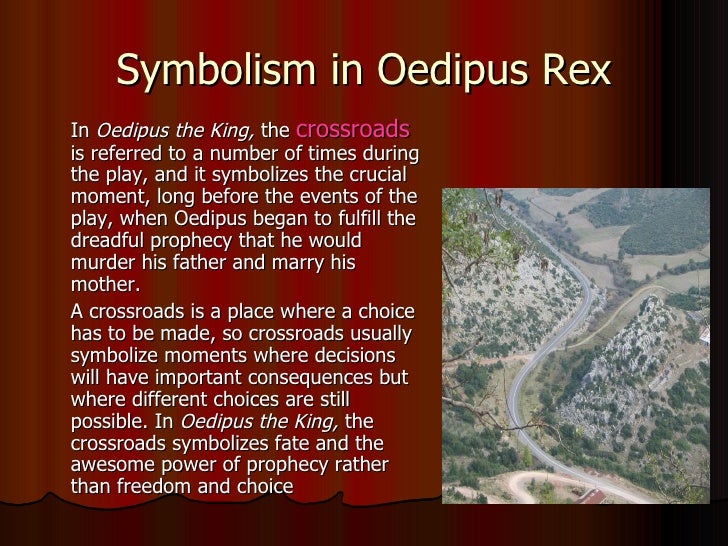
Above is a short review of what it means to be at crossroads with yourself and how it relates to the legend of Oedipus Rex. After Oedipus married his mother Jocasta, they had 3 children: Antigone, Polynices, and Eteocles which developed the story Antigone.
I took out of this lecture that grief and sadness is personal. Emotions have tremendous power and sometimes people act rational or irrational because of those feelings. Whether a person is feeling remorseful or remorseless has different effects on the outcome of decision making. Feelings of anger, lack of reasoning and thought, and ethical vs unethical have a huge impact on doing what's right. Whether a person is headstrong like Antigone, or steadfast like Creon, a person can make irrational decisions because of emotions blocking their mind to think clearly.
_________________________________________________________________________________
May 1st, 2018 - Favorite Lecture #1
Introduction to Poetry Unit
Themes We Discussed:
- Love For Another
- Loving Yourself
- Love is Timeless
- Human Heart That Speaks
We Talked About the Power of Poetry:
- Mastering a Language:
- Learning to Speak Well and Clearly
- Emotional Intelligence
- Language is Feeling Meaning or Purpose
- In large humanity and Express it
- Seeing through the eyes of other people
- Comprehending
This was another one of my favorite lectures. I was never great at interpreting poetry and I still am not. However, this discussion on the many of ways you can get emotion through just a simple amount of lines opened my eyes to the great works of poetry and music. Poetry makes has have hope and faith in our lives and shows us other people's perspectives on life. It teaches us of the many lessons of desires; including one's we learned all semester long such as love, wants, and needs. We are not perfect, and most everything is out of our control. Poetry also teach us about love and true love. Being able to love someone so much, you would do anything to protect it and fight for it.

_________________________________________________________________________________
Accepting What Is
J. K. Rowling once said, “Understanding is the first step to acceptance, and only with acceptance can there be recovery.” By learning and accepting oneself and who you are, then you can move on to happiness and be open to change. Surviving the pain is the first step in order to finally free oneself. Numbing the pain will only make the pain invisible at first, but in the end it will only be worse when you finally feel it. Accepting the standards of certain behaviors of social groups, individuals will develop a philosophical view of social norms and have more self-fulfilling expectations. These social norms are rules and a particular set of expectations about the “proper” way we should behave. In the short stories, White Women of Color by Julia Alvarez, and The Yellow Wallpaper by Charlotte Perkins Gillman and television show 13 Reasons Why created by Brian Yorkey, the main character’s focus on the hardships of cultural divide, oppression and acceptance by going through severe discrimination of racial and gender barriers, and isolation.
In the short story White Women of Color by Julia Alvarez, Alvarez writes about the challenges children of Dominican heritage face through bicultural and bilingual experiences. In different cultures, the internalization of colorism is a common practice especially in the Dominican Republic. The internalization of colorism is a process that “privileges light skinned people of color over dark skinned in areas of income, education, housing and marriage (Sarah. L).” In certain cultural context, people just want to be more like “white people” because skin color tones create a hierarchy of beauty with light skinned people. Alvarez states, “we were a progression of whitening, as if my mother were slowly bleaching the color out of her children (Alvarez, 2).” This is an example of prejudiced attitudes and discriminatory acts against people based on the color of their skin. Two people of the same race will be treated differently because they have different skin tones. A person with darker skin may signal a type of lower class or working class, whereas a person of lighter skin is considered “upper class.” All of Alvarez’s sisters had different features and each one after had lighter skin and lighter hair. Body sizes and body types is also seen in excess to the norm in A White Woman of Color. The normal body type is an indicator of “smallness.” The false logic behind Latina and black women to have unrealistic body proportions, such as curvy bodies with small waist and toned arms were only social accepted.
The main character in the short story The Yellow Wallpaper by Charlotte Perkins Gillman also shows signs of gender discriminations and inequality through isolation. She struggled by the actual opposition and is threatened of her needs, values, interest, and power from her husband. Her husband decides to lock her away, and takes away everything that was once important to her, such as her desire to write. The effects isolation has on an individual can lead them to insanity. Being isolated in a small room for a long period of time, lead the women to start seeing things behind the wallpaper. The woman shows signs of depression because of how isolated she becomes from society. She becomes secluded from the real world with nothing to hold onto. The constant time she has allows her to examine and reflect on the wallpaper that surrounds her in the room continues to push her further more into insanity. She creates this fictional person inside the wallpaper that compensated for the lack of human contact. Humans cannot deal with isolation for extended periods of time and cannot cope with her rest cure treatment, she decides to break free and rips all the wallpaper off the walls. “That poor thing began to crawl and shake the pattern, I got up and ran to help her. I pulled and she shook, I shook and she pulled, and before morning we had peeled off yards of that paper (Gillman 9).” She was able to break free from her suffering of hysteria allowing her to become independent from her husband. People need interactions with people because human beings need those experiences to help them understand the reasons for life and living.
Hannah Baker, the main character of Netflix original series, 13 Reasons Why, goes through the inevitable life of a teenager in high school. The struggles of drugs, sex, and violence of student societies acceptance in high school. Hannah produces 13 tapes for 13 different individuals that she declares are the reasons why she committed suicide. Every high school student fears and wish for the tangible stress of social acceptance and social conformity. Social conformity is “taboo,” because to talk about the stress od social approval is to uncover the truths about oneself in public. Hannah achieves conformity by showing these tapes to the public, by abandoning these long-held convictions and sacrificing her self-regards to be accepted into a group.
The first tape we learn from Hannah’s social catastrophe, was one student who was frightened of potentially losing and facing rejection from his peer group. Hannah devotes her first tape to her first real crush and her first kiss to a boy names Justin Foley. Justin, a student who makes a terrible decision, decides to take a picture of Hannah changing for his own pleasure. He realizes his representation and retaining of his friend group is more important so he allows to let his friend Bryce spread the photos around school. Tape five is another example of a student who chooses social acceptance over isolation in order to secure her own self-interests. Courtney Crimson is at first a sweet girl at school who befriends Hannah, however, she turns out to be a complete phony. She ends up betraying Hannah by making up a story of her and another girl kissing at a party, leading to every guy in school thinking she’s “easy.” We later find out the picture of Hannah kissing another girl is actually Courtney and she becomes ashamed and afraid that everyone will find out she is a lesbian. Justin and Courtney are two characters in the television show that proves protecting their reputations will protect themselves from being an outcast and suffering from the same pain Hannah endured. Showing people will go to great lengths to achieve social acceptance in order to achieve their own happiness.
J.K Rowling also once said, “We are only as strong as we are united, as weak as we are divided.” People need interactions with other people because it is such a significant part of life and understanding social norms and understanding of living through the hardships life throws at you. Therefore, by exposure or experience of different relationships and self-fulfilling individual ambitions, an individual can block out any negativity and socially accept oneself. With daily positive psychological well-being, such as ethnic and family identification, an individual with feel higher levels of happiness and a decrease in daily social anxiety symptoms.
Powerful Scene from 13 Reason Why:
Works Cited
Alvarez, Julia. A White Woman of Color. 5th ed., 1998.
Gilman, Charlotte Perkins, 1860-1935. The Charlotte Perkins Gilman Reader : The Yellow Wallpaper, and Other Fiction. New York :Pantheon Books, 1980. Print.
Webb, Sarah L. “Colorism and Racism: What Is the Difference?” Colorism Healing, 18 Aug. 2017, colorismhealing.org/colorism-and-racism/.

 The Greek play Antigone by Sophocles presents several conflicting themes including destiny vs. self-determination, written law vs. moral law emotion vs. reason, and women vs. men. Regarding the latter, Antigone explores gender roles and gender bias, specifically focusing on the power between men and women. The play’s portrayal of Antigone’s rebellious behavior and Creon’s self-serving dictatorship highlights the prevalence of gender bias.
Ancient Greek societies were particularly stereotypical in regards to the roles of women and men. In the city of Thebes in the context of the play, women were portrayed as shy, subservient, cowardly, and obedient. Women traditionally would not dare to defy a man’s authority and there were notable consequences if they did. Thus, women tended to submit to the power of a man and relinquish control over their own destiny. However, Antigone goes against that and chooses her own path by rebelling against the kings ruling. Antigone’s decision to disobey the king to give Polyneices a proper burial reveals how her personal morals override the societal pressure to submit to power of men. However, Sentry disregards the power of a women and assumes a man committed the crime, stating, “Yes I will tell you. Someone just now buried the corpse and vanished. He scattered on the skin some thirsty dust; he did the ritual, duly, to purge the body of desecration.” (Sophocles 268-271). Revealing one example of gender bias, that it would be considered impossible for any woman to go against a man.
 Evidence in the play suggests the ongoing conflict between Creon and Antigone is related to their gender roles such that Creon assumes male authority and control and undermines women’s freedom and power; alternatively, Antigone is fearless and determined even when it means challenging a man’s authority. When Creon and Antigone discuss being free in mind versus controlled by authority, Antigone states, “No these do, too, but keep their mouths shut for the fear of you” and Creon replies, “Are you not ashamed to think so differently from them?” (555-559). Creon further states, “While I am living, no women shall have rule.” (Creon, 525), which suggests he is too proud of his image to acknowledge a woman defied his power. His law should not be violated by anyone especially woman because it is not in their nature to challenge a man of his authority.
_________________________________________________________________________________

Written Law vs. Moral Law:
 The Greek play Antigone by Sophocles presents several conflicting themes including destiny vs. self-determination, written law vs. moral law emotion vs. reason, and women vs. men. Regarding the latter, Antigone explores gender roles and gender bias, specifically focusing on the power between men and women. The play’s portrayal of Antigone’s rebellious behavior and Creon’s self-serving dictatorship highlights the prevalence of gender bias.
Ancient Greek societies were particularly stereotypical in regards to the roles of women and men. In the city of Thebes in the context of the play, women were portrayed as shy, subservient, cowardly, and obedient. Women traditionally would not dare to defy a man’s authority and there were notable consequences if they did. Thus, women tended to submit to the power of a man and relinquish control over their own destiny. However, Antigone goes against that and chooses her own path by rebelling against the kings ruling. Antigone’s decision to disobey the king to give Polyneices a proper burial reveals how her personal morals override the societal pressure to submit to power of men. However, Sentry disregards the power of a women and assumes a man committed the crime, stating, “Yes I will tell you. Someone just now buried the corpse and vanished. He scattered on the skin some thirsty dust; he did the ritual, duly, to purge the body of desecration.” (Sophocles 268-271). Revealing one example of gender bias, that it would be considered impossible for any woman to go against a man.
 Evidence in the play suggests the ongoing conflict between Creon and Antigone is related to their gender roles such that Creon assumes male authority and control and undermines women’s freedom and power; alternatively, Antigone is fearless and determined even when it means challenging a man’s authority. When Creon and Antigone discuss being free in mind versus controlled by authority, Antigone states, “No these do, too, but keep their mouths shut for the fear of you” and Creon replies, “Are you not ashamed to think so differently from them?” (555-559). Creon further states, “While I am living, no women shall have rule.” (Creon, 525), which suggests he is too proud of his image to acknowledge a woman defied his power. His law should not be violated by anyone especially woman because it is not in their nature to challenge a man of his authority.
Antigone is fearless when it comes to her own beliefs and she is not afraid to tell it how it is unlike the others in the city. “But if, according to your best judgment, you are acting rightly, you have nothing to fear.” (Epitetus) Antigone is a great example of how she her actions is evidence of the role of individual conscience and choose to go against the norms of society. Many people in the city respect her having such high morals and being so loyal to her family. Creon’s final decision to sentence Antigone to death will lead him to deep tragedy. Antigone’s actions exemplify how women can have a voice and assert power in a male-dominated society. Antigone’s defiance carries a powerful feminist message, how women hold their own power and wisdom in moderation.
_________________________________________________________________________________
"I couldn't go on believing her story and live with Stanley" (Stella, 1232).
"It's Just An Illusion"
Human beings are born with needs essential to their survival, and as they grow up their needs may become desires that sometimes cannot be attained. One of humanity’s most important innate needs is dependable companionship. Individuals tend to cling onto the people who are close to them to meet this need and in part because they are afraid of letting them go and living on without them. In the play, “A Streetcar named Desire” by Tennessee Williams, Stella feels she cannot live without her husband Stanley and believes she would be miserable without him.
Stella says to Eunice, “I couldn’t believe her story and go on living with Stanley.” This statement by Stella reflects her preference for denial over accepting a painful truth and terminating the relationship. Stella comes to realize believing Blanche’s promiscuous past will destroy her perfect illusion of her and Stanley’s ideal relationship. Stella becomes trapped in her own illusion just like Blanche to avoid the truth and be “happy.” To avoid facing the harsh reality that Stanley raped her sister Blanche, Stella decides to send Blanche away and live on in denial.
Williams uses illusion as a means of distorting his characters’ Stella and Blanche, realities and allowing them to remain ignorant to difficult truths. Illusion offers Stella the false belief putting Blanche in a home is the only thing she could do to help her sister. Blanche uses the external world to create physical wants to cover up her desire to feel wholesome by attaching herself to her possessions and made up people. After Blanche lost most of her family and Belle Reve, she fantasizes about how one day she will marry a rich man from Dallas and have an easy dream-like life; but, in reality, this will never come true for her because everywhere she goes her past follows. In a similar way, denial often serves as a barrier to seeking medical help and interferes with making psychological adjustments to diagnoses and diseases such as cancer. Denial-like processes can be seen in cancer patients as a means of coping with the painful reality of impending death. In the report Clarification of the Conceptualization and Measurement of Denial in Psychological Oncology Research, “Researchers have found that the use of denial may be related to delays in symptom recognition, medical help-seeking, and adherence to medical treatment, as well as psychological adjustment to being diagnosed with a life threatening illness” (Moyer 1).
When a doctor informs a patient they have a terminal illness and limited time to live, the patient will likely experience the first stage of grief: denial. The individual will attempt to go on with their everyday life and try to forget they only have a short amount of time left to live. Moreover, denial may lead cancer patients to hide the truth from their family, children, or friends because they do not want to believe they are going to die. As a result, these close others are denied the opportunity accept the individual is dying and may struggle to get closure. Not allowing family and friends to process their emotions due to one’s own denial can further contribute to their shock and fear for their own life without them. One way to confront denial is to talk about the illness and accept support and comfort from loved ones. Leaning on close others, allows them the opportunity to reflect on the reality of losing a loved one and experience empathy. Alternatively, if Blanche were able to accept her life struggles and willing to seek support from Stella and Stanley, all the weight of her lies would be lifted off her shoulders.
Blanche and Stella can be directly related to the illusion that without the need of companionship we cannot live without, can lead us into denial. Blanche creates external battle with herself because she cannot live with the life she has created for herself. Giving Stella no other alternative for Blanche therefore, the only way to keep her life stable and lively is by staying with Stanley. We cannot survive without the need to seek happiness, love, affection, and championship.
Work Cited
Moyer, Anne, and Ellen G Levine. “Clarification of the Conceptualization and Measurement of Denial in Psychological Oncology Research.” ProQuest, Sept. 1998,
_________________________________________________________________________________
True Love's Purpose
Robert Williams delivers a powerful quote from the film Dead Poets Society; “We read and write poetry because we are members of the human race. Poetry, beauty, romance and love, these are what we stay alive for. The powerful play goes on and you may contribute a verse. What will your verse be?” Everyone must be able to find their own voice and stand by their own beliefs. To be ordinary is boring, but to be “significant” is powerful. Two essential writing elements that helps determine the truth and meaning behind the writing is theme and tone. We are able to feel it, listen to it, and express it in anyway we decide. “Let me not to the marriage of true minds” by William Shakespeare, “Resignation” by Nikki Giovanni, and “Just the Way You Are” by Billy Joel share universal message through love. Relationships can bring pressure, burden and worry, however, true love is valuing the other person by understanding their perspective.
In the poem “Resignation” by Nikki Giovanni, she uses alliteration to get her ideas across to the listener or reader. She uses spring with storm and saying, sorry, stopped and speeding. She also uses consonance and assonance. Her figurative language is a way to show the love as being forever and the only way if she didn’t love the person is for her to be reborn again. “I love you because it’s been so good for so long that if I didn’t love you I’d have to born again” (Giovanni, 44). In addition, she uses imagery to appel the reader into the story. “Earth turns round the sun Falling off this Earth into another dimension” (Giovanni, 2). The poem relates to the song by Billy Joel because the mood in each is hopeful and optimistic where no matter the time or the tough times they will find a way to be together. No matter the hard time, they will get past them because true love conquers all. “Because the winters flow into springs and the air clears after the storm,” (Giovanni, 7) and “Though my life is a mess I love you because I don’t want it any other way” (Giovanni, 28).
In the poem “Let me not the marriage of true mind” by William Shakespeare he describes love in only way he sees it. Through wrong doings, whether the bad or the good, if you love them truly, love can never be broken. Shakespeare writes, “Which alters when it alteration finds,” he is saying that changes will happen in relationships and that’s okay as long as you can get through it together (3). “That looks on tempests and is never shaken” (Shakespeare, 6). No matter how big the storm is or fight, it can not shake the love the person has for other. Lastly, this quote “Love alters not with his brief hours and weeks” (Shakespeare, 11) relates to the song by Billy Joel because in both poems love does not alter with hours and weeks, love is forever.
The song, “Just the Way You Are” by Billy Joel relates to these two poems in many ways. Billy sings, “I wouldn’t leave you in times of trouble,” which is similar to both Shakespeare and Giovanni that difficult times will come but he will never leave. He will fight for the love they have because he knows the bad times will pass. “I took the good times; I’ll take the bad times I’ll take you just the way you are.” Tone throughout the entire song shows how he loves everything about this girl, and the message is clear that love is forever. “I said I love you and that’s forever” (Joel, 21).
Without theme and tone, words on a paper are insignificant. They hold ideas of emptiness and lifeless of the idea of having no real direction. A writer can bring deep feelings of pain, wonder, and lust and knowing how to use these elements correctly can bring great potential to poetry. The theme is love through there is no time limit for it, and the tone is indifferent, optimistic, and the importance of love to the soul. “Love’s not Time’s fool, though rosy lips and cheeks” (Shakespeare, 9). Love is not determined based on time, but how it last through transformation and growth as individuals. True love stands forever. Nothing can stop change from happening and sometimes it means everything.
Links:
Comments
Post a Comment